

About Serbia
Serbia
Positioned at the crossroads of Central and Southeast Europe, Serbia offers an increasingly attractive residency by investment pathway for global investors seeking access to a rapidly developing economy with competitive tax rates, an EU accession trajectory, and a strategic gateway to both European and Eurasian markets.
Country Overview
Serbia’s residency by investment framework provides a pragmatic route for international investors and entrepreneurs seeking a European base with significant growth potential. Through business incorporation, real estate acquisition, or qualifying employment, foreign nationals can obtain temporary residency permits that are renewable and lead to permanent residency and eventual citizenship eligibility. Serbia’s flat tax system, low cost of living relative to Western Europe, and active EU accession negotiations make it a compelling jurisdiction for forward-thinking investors. Contact our advisory team to explore how Serbia’s residency pathways align with your strategic objectives.
Country Information
Strategic Advantages
Why Serbia
Competitive Flat Tax Rate
Serbia maintains a flat corporate tax rate of 15 per cent and a flat personal income tax rate of 10 per cent, among the lowest in Europe and highly favourable for business owners and investors.
EU Accession Trajectory
Serbia is an official candidate for European Union membership, with accession negotiations actively progressing. Early establishment of residency positions investors ahead of anticipated regulatory and economic alignment.
Affordable Real Estate
Belgrade’s property market offers significant value compared to Western European capitals, with strong appreciation trends driven by foreign investment inflows, infrastructure development, and growing international demand.
Strategic Geographic Position
Located at the intersection of Central and Southeast Europe, Serbia provides direct access to EU, Balkan, and Eurasian markets, supported by free trade agreements with the EU, Russia, Turkey, and EFTA nations.
An Introduction to Serbia
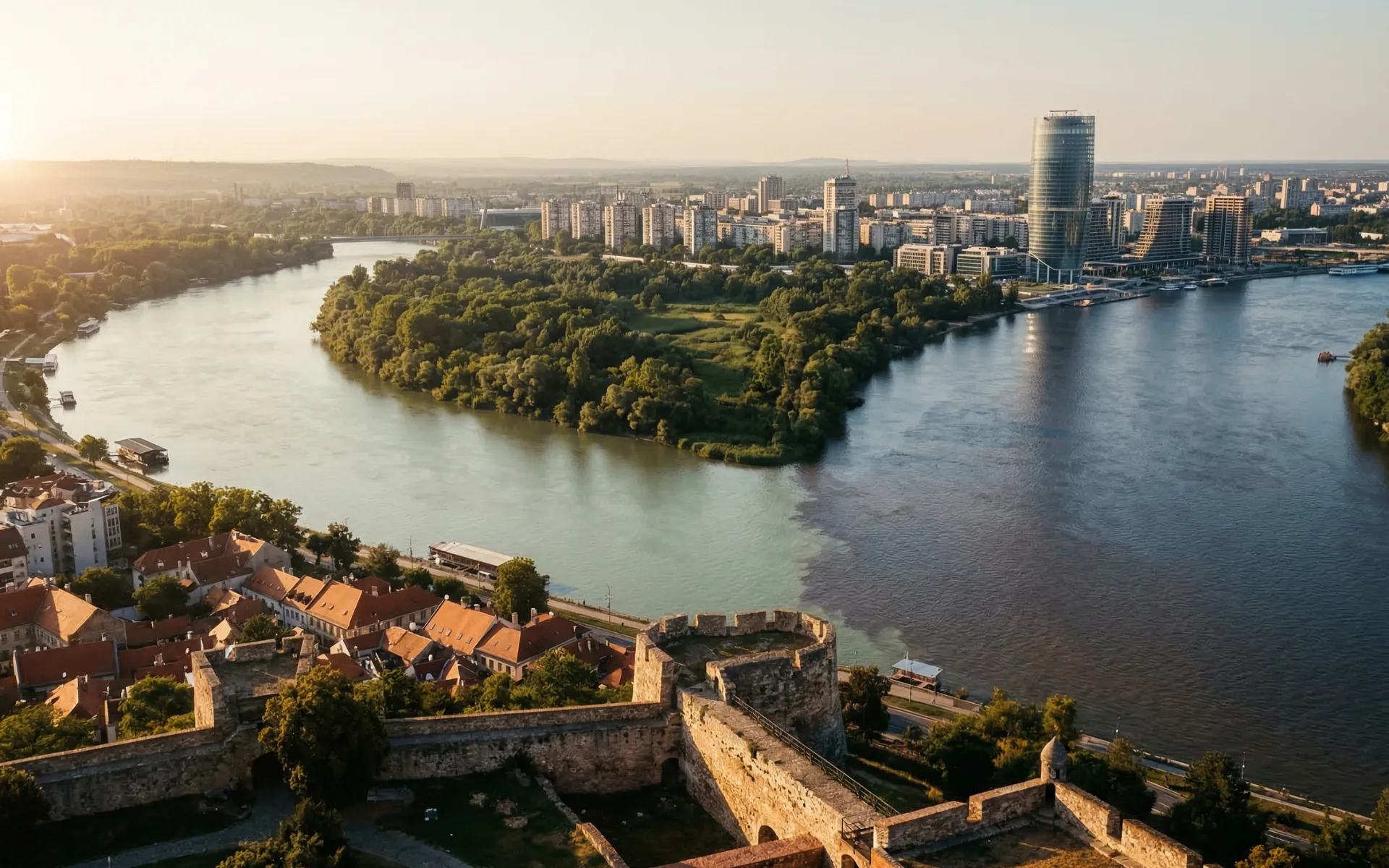
The Republic of Serbia is a landlocked nation in Southeast Europe, situated at the confluence of the Danube and Sava rivers. Covering approximately 88,361 square kilometres, Serbia borders Hungary to the north, Romania to the northeast, Bulgaria to the southeast, North Macedonia and Kosovo to the south, Montenegro and Bosnia and Herzegovina to the west, and Croatia to the northwest. Its capital, Belgrade, is one of the oldest continuously inhabited cities in Europe.
Serbia operates as a parliamentary republic with a robust democratic framework. Following independence from the State Union of Serbia and Montenegro in 2006, the country has pursued a path of economic liberalization and institutional reform aligned with European Union accession requirements. Serbia was granted official EU candidate status in 2012, and accession negotiations have been underway since 2014.
The Serbian economy has demonstrated consistent growth, driven by manufacturing, agriculture, information technology, and services. The country has attracted substantial foreign direct investment from major multinational corporations, particularly in the automotive, technology, and financial services sectors. Belgrade has emerged as a significant technology hub in Southeast Europe, with a highly educated workforce and competitive labour costs.
For international investors, Serbia offers a uniquely favourable business environment. The flat corporate tax rate of 15 per cent is among the lowest in Europe, complemented by generous incentive programs for qualifying investments, including tax holidays of up to ten years for large-scale projects. Serbia’s network of free trade agreements provides preferential access to markets encompassing over one billion consumers.
The real estate market presents compelling opportunities, particularly in Belgrade where demand from international buyers, diplomatic missions, and the growing expatriate community continues to drive appreciation. New Belgrade has transformed into a modern business district, while historic neighbourhoods such as Dorcol and Vracar attract investors seeking character properties with strong rental yields.
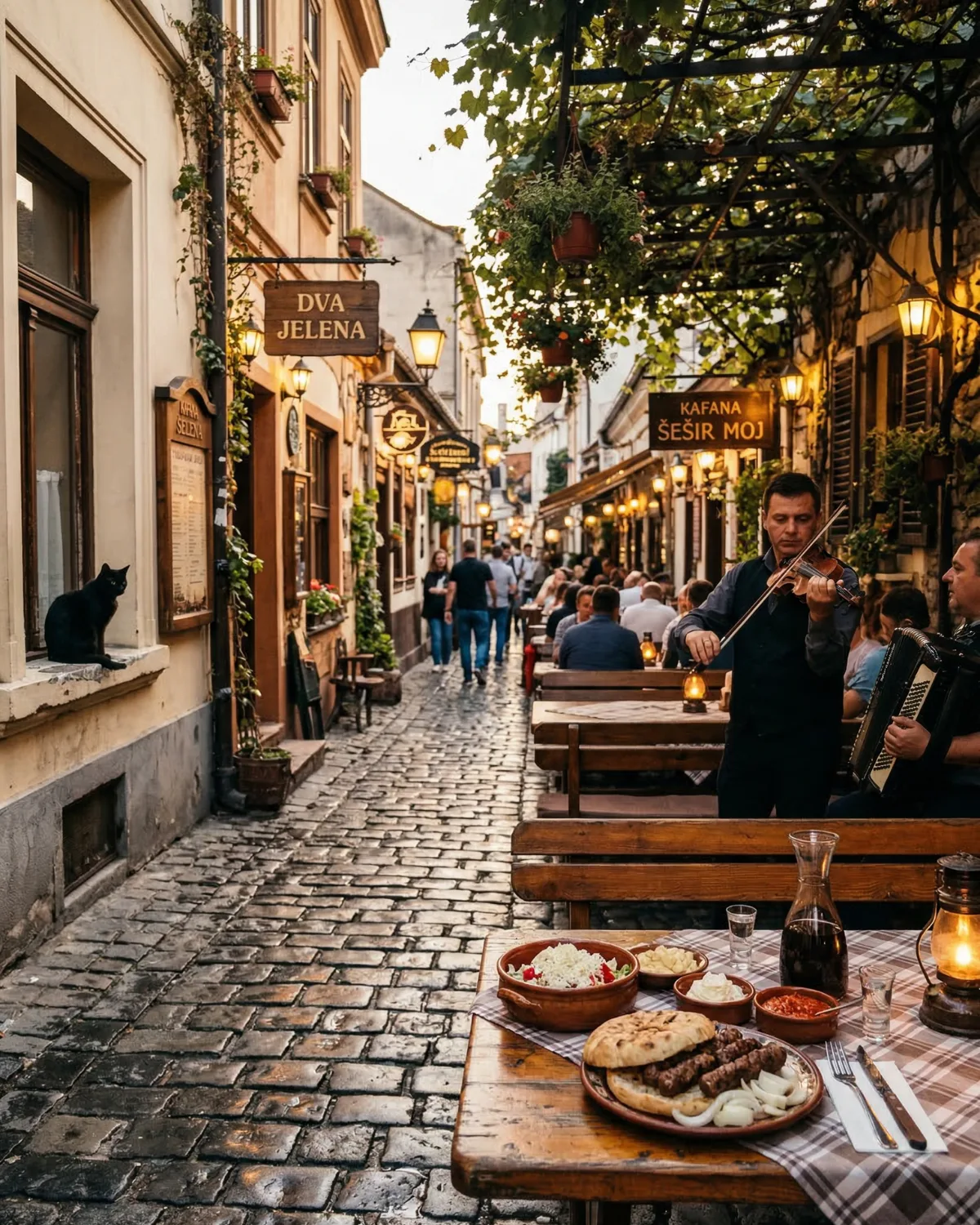
Serbia’s quality of life is underpinned by affordable living costs, a Mediterranean-influenced continental climate, a rich cultural heritage, and an increasingly sophisticated urban infrastructure. The country’s healthcare system includes both public and private facilities, with modern private clinics in Belgrade offering services comparable to Western European standards.
At a Glance
Key Facts
15% Corporate Tax
Tax Framework
One of the lowest flat corporate tax rates in Europe, with additional incentives available for qualifying foreign investments
EU Candidate
EU Candidate
Official European Union candidate with active accession negotiations, offering early-mover advantages for strategic investors
1 Year Initial
Key Metric
Temporary residency permits issued for one year, renewable annually with a pathway to permanent residency after five years
136 Destinations
Visa-Free Destinations
Serbian passport holders enjoy visa-free or visa-on-arrival access to 136 countries and territories worldwide
Free Trade Access
Free Trade Access
Preferential trade agreements with the EU, Russia, Turkey, EFTA, and CEFTA, covering markets of over one billion consumers
Yes
Family Eligible
Spouse, dependent children, and other qualifying family members may obtain residency alongside the principal applicant
Investment Pathways
Available Programs
Investment Programme
Residency by Investment
Obtain Serbian temporary residency through company registration, real estate investment, or qualifying business activities. Permits are renewable annually with eligibility for permanent residency after five years and citizenship after an additional three years of continuous residence.
Learn More —→Investment Programme
Real Estate Investment
Invest in Serbia’s growing property market, from modern developments in New Belgrade to historic renovations in the city centre, combining residency qualification with asset acquisition in one of Southeast Europe’s most dynamic markets.
Learn More —→Common Questions
Frequently Asked Questions
What are the main pathways to residency in Serbia?
Foreign nationals may obtain temporary residency in Serbia through several pathways, including company registration and business ownership, real estate acquisition, employment with a Serbian entity, or enrolment in an educational institution. The most common route for investors is establishing a Serbian company and obtaining a residency permit on the basis of business operations.
How long does the residency application process take?
Temporary residency applications are typically processed within 30 to 60 days of submission. The initial permit is valid for one year and is renewable annually. After five years of continuous temporary residency, applicants become eligible for permanent residency.
Can I obtain Serbian citizenship through the residency program?
Yes. After holding permanent residency for a minimum of three years, foreign nationals may apply for Serbian citizenship through naturalization. Serbia permits dual citizenship for nationals of countries with which it has bilateral agreements, and the renunciation requirement is assessed on a case-by-case basis.
What are the tax implications of Serbian residency?
Serbia applies a flat personal income tax rate of 10 per cent and a corporate tax rate of 15 per cent. Tax residents are subject to taxation on worldwide income, though Serbia’s extensive network of double taxation treaties mitigates the risk of double taxation. Capital gains are taxed at 15 per cent, and there is no wealth tax or inheritance tax for direct-line descendants.
Is there a minimum investment requirement for residency?
Serbia does not stipulate a fixed minimum investment amount for residency purposes. However, applicants must demonstrate genuine business operations or property ownership. For company-based residency, the business must be registered, operational, and compliant with Serbian tax regulations. For real estate-based residency, the property must be registered in the applicant’s name.

Specialist Services
How we work in Serbia
Residence by Investment
Residence-permit advisory for Serbia and other qualifying jurisdictions.
Learn more →Citizenship by Investment
Programmes leading to a second passport, including options relevant to Serbia.
Learn more →Investment Real Estate
Curated qualifying properties in Serbia and 21 other markets.
Learn more →Strategic Advisory
Senior-led, jurisdiction-agnostic engagement for complex situations.
Learn more →